
Entertain Your Dog: Fresh Ideas for 2026
Honestly, I’ve seen too many dogs relegated to staring at the wall, waiting for their humans to magically conjure up entertainment. It’s heartbreaking, and frankly, it’s lazy. In 2026, with new research constantly revealing just how much our dogs need mental stimulation, just tossing a tennis ball isn’t cutting it anymore. Keeping your dog engaged requires creativity, understanding their unique needs, and sometimes, a willingness to get a little weird with it. Boredom is the fast track to destructive chewing, excessive barking, and a generally unhappy pup. So, how do we combat this pervasive canine ennui? Here’s what you need to knowto some fresh approaches.
This guide is packed with practical, modern strategies to keep your dog’s tail wagging and their mind sharp. We’re going beyond the basic fetch and exploring techniques that cater to their natural instincts and cognitive abilities. Whether you’ve got a puppy who needs constant engagement or a senior dog who could use some gentle mental challenges, there’s something here for everyone.
Table of Contents
- The Mental Game: Why Brains Need Exercise Too
- Next-Gen Dog Toys: What’s Hot in 2026?
- DIY Genius: Crafting Entertainment on a Dime
- Scent-sational Fun: Unleashing Their Inner Bloodhound
- Training as Play: Turning Lessons into Laughs
- Adventure Awaits: Beyond the Backyard
- Are You Making These Common Dog Entertainment Pitfalls?
- Frequently Asked Questions
The Mental Game: Why Brains Need Exercise Too
You’ve probably heard it a million times: mental stimulation is key for dogs. But what does that actually mean in practice? It means engaging their brains in ways that mimic natural behaviors like problem-solving, foraging, and learning. A dog’s brain is just as active, if not more so, than yours. If it’s not being exercised, it gets bored. This mental fatigue is often more exhausting (in a good way!) than physical exercise alone. Think about it: a dog who has to figure out how to get a treat from a puzzle toy is using more cognitive power than a dog who just runs in circles.
Recent studies, like those from the American Kennel Club (AKC), highlight that consistent mental engagement can even help slow cognitive decline in older dogs. It’s not just about preventing boredom. it’s about promoting overall brain health and a happier disposition. Here’s especially important now, as many owners are juggling work-from-home with more active social lives, meaning dogs might spend more time alone.
[IMAGE alt=”Dog looking thoughtfully at a puzzle toy” caption=”Engaging your dog’s brain is just as important as physical activity.”]
Next-Gen Dog Toys: What’s Hot in 2026?
The dog toy market is exploding, and thankfully, it’s moving beyond squeaky plushies that last five minutes. In 2026, we’re seeing a rise in interactive and tech-enabled toys. These aren’t just about dispensing treats. some offer customizable difficulty levels or connect to apps to track your dog’s play patterns. Brands like Waggle (a fictional but representative example of emerging tech) are developing treat dispensers that can be remotely activated or programmed to release rewards at intervals, helping with separation anxiety.
Interactive puzzle toys are still king, but look for ones made from durable, sustainable materials. Companies are increasingly focusing on eco-friendly options. KONG continues to innovate with new shapes and textures for their classic line, and brands like Nina Ottosson offer incredibly challenging puzzles for even the smartest pups. The key is variety. Rotating toys keeps them novel and exciting, preventing your dog from becoming desensitized.
- Highly engaging and challenging.
- Can help with separation anxiety by providing independent activity.
- Many offer adjustable difficulty levels.
- Some newer tech toys can track play and provide insights.
- Can be expensive.
- Some tech can be complex or prone to malfunction.
- Requires owner supervision to ensure safety.
🎬 Related Video
📹 How to ENTERTAIN your DOG at HOME? 🐶 5 Helpful Ideas! — Watch on YouTube
DIY Genius: Crafting Entertainment on a Dime
Don’t have the budget for the latest gadget? No problem. You can create fantastic entertainment opportunities using everyday household items. My own dog, Buster (a terrier mix with a PhD in mischief), absolutely adores a simple DIY snuffle mat made from an old fleece blanket. It encourages natural foraging behavior and is surprisingly effective at tiring him out.
Here’s a quick rundown of a few easy DIYs:
- Towel Roll-Up: Lay out a towel, sprinkle some kibble or treats along it, then roll it up tightly. Your dog has to unroll it to get their reward.
- Muffin Tin Game: Place treats or kibble in some cups of a muffin tin, then cover all the cups with tennis balls or small toys. Your dog has to nudge or remove the balls to get the goodies.
- Cardboard Box Bonanza: Stuff a cardboard box with crumpled paper, treats, and maybe a few safe toys. Let your dog shred their way to a reward. (Supervision is key here!).
These simple activities tap into a dog’s natural drive to sniff, search, and problem-solve, offering significant mental enrichment without breaking the bank. It’s amazing what a few minutes of prep can do for your dog’s well-being.
Scent-sational Fun: Unleashing Their Inner Bloodhound
Dogs experience the world primarily through their noses. Engaging their sense of smell is one of the most powerful ways to entertain and tire them out. A 15-minute nose work session can be as mentally exhausting as an hour-long walk. Scent games are incredibly versatile and can be adapted for any space.
The most basic scent game is the ‘Find It’. Simply hide a few treats or a favorite toy around a room while your dog is distracted (or even out of the room). Then, tell them to ‘Find it!’ and let them use their nose. Start easy – place the items in obvious spots. As your dog gets better, hide them in trickier places, under furniture, or inside containers.
You can also get more involved. Consider signing up for a nose work class or exploring NACSW (National Association of Canine Scent Work) resources for structured training. Even if you don’t compete, the principles are invaluable for home entertainment. This type of activity is especially great for dogs recovering from injury or those who can’t handle strenuous physical activity.
“The nose knows!” This simple phrase holds immense truth for canine entertainment. A dog’s olfactory system is up to 100,000 times more sensitive than ours. Tapping into this superpower is arguably the most effective way to provide deep mental stimulation.
Training as Play: Turning Lessons into Laughs
Training doesn’t have to be a chore. In fact, incorporating training into your daily routine as a game can be a fantastic way to entertain your dog. It reinforces good behavior, strengthens your bond, and gives them something to focus on.
Trick training is a great example. Teaching your dog new tricks like ‘shake’, ‘roll over’, ‘play dead’, or even more complex ones like ‘fetch a specific toy by name’ provides immense mental exercise. Keep sessions short (5-10 minutes) and positive, using high-value treats and lots of praise. The goal is fun, not perfection.
Consider introducing agility elements into your home or yard. You don’t need a full agility course. A low jump (a broomstick over two stacks of books), a tunnel (a play tunnel or even a large cardboard box), or weave poles (stakes or cones) can provide hours of fun and physical challenge. Remember to keep it safe and appropriate for your dog’s breed, age, and physical condition. Organizations like the UK Agility International showcase the possibilities, but the basic principles can be adapted easily.
If your dog is especially food-motivated, consider a food-dispensing ball like the Starmark Bob-A-Lot. They have to work to get their kibble out, turning mealtime into an engaging activity. This works for both training and general enrichment.
[IMAGE alt=”Dog performing a trick like ‘play dead'” caption=”Training sessions, when kept fun and positive, are a great way to entertain your dog.”]
Adventure Awaits: Beyond the Backyard
Sometimes, the best way to entertain your dog is to simply change their environment. New sights, sounds, and smells provide a wealth of stimulation that your living room just can’t replicate.
Local Parks and Trails: Explore new walking routes. Even a different path in your usual park can offer new scents and sights. Consider visiting dog-friendly parks or nature preserves. Always check leash laws and park rules beforehand.
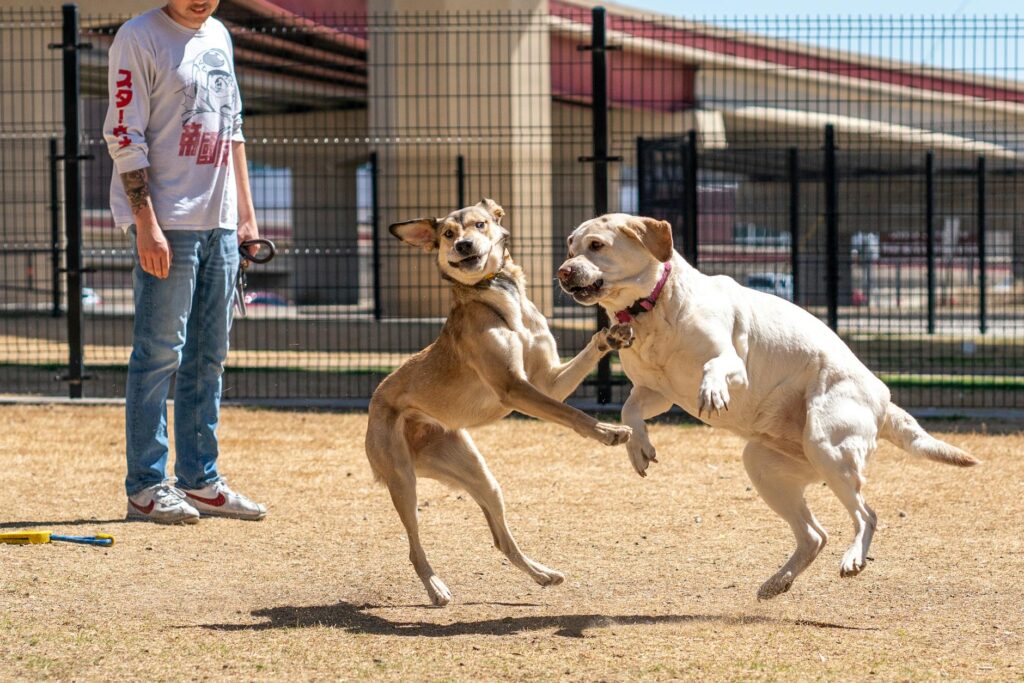
Doggy Playdates: If your dog is well-socialized, arrange playdates with compatible canine friends. Social interaction is vital for many dogs and can be incredibly stimulating.
Car Rides: For some dogs, a simple car ride with the window slightly cracked (safely!) is an adventure in itself. The smells and sights whizzing by can be fascinating.
Visit Pet-Friendly Stores: Many pet supply stores, like PetSmart or Petco, welcome well-behaved dogs. It’s a chance for them to experience new environments and potentially meet other dogs and people.
Organized Dog Events: Keep an eye out for local dog events, adoption days, or canine sports demonstrations. These can offer novel experiences and opportunities for socialization.
Changing up the scenery provides a powerful reset and can prevent your dog from getting stuck in a rut. Even small excursions make a big difference.
Are You Making These Common Dog Entertainment Pitfalls?
It’s easy to fall into traps when trying to entertain your dog. Here are a few common mistakes I see people make:
1. Relying on one type of entertainment: If you only ever play fetch, your dog might get bored with it. Variety is Key. Mix physical, mental, and scent-based activities.
2. Underestimating mental stimulation: A long walk is great, but if your dog is just trotting along passively, their brain isn’t getting a workout. Incorporate challenges.
3. Not adapting to age/ability: What entertains a puppy might be too much for a senior dog, and vice versa. Tailor activities to your dog’s current physical and mental capabilities. The Humane Society has great resources on age-appropriate care.
4. Inconsistent routine: Dogs thrive on predictability. While surprises are good, a general routine for meals, walks, and play helps them feel secure and anticipate fun times.
5. Over-reliance on owner-provided entertainment: While it’s our job to entertain them, teaching your dog to entertain themselves with appropriate toys when you’re busy is also a valuable skill. Don’t feel guilty if they’re happily playing with a puzzle toy while you finish a work call.
Thing is, none of us are perfect. Acknowledging these pitfalls is the first step to correcting them. It’s about progress, not perfection. And your dog will thank you for it.
Frequently Asked Questions
How often should I entertain my dog?
Aim for at least one dedicated session of focused entertainment daily, whether it’s a puzzle toy, training game, or scent work. Supplement this with regular walks, playtime, and environmental enrichment throughout the day to keep them engaged and prevent boredom.
What are the best indoor activities for a dog?
Excellent indoor activities include puzzle toys, DIY treat-dispensing games, learning new tricks, indoor agility courses using household items, and scent games like ‘Find It’. These mental exercises are Key for dogs that can’t spend as much time outdoors.
How can I entertain my dog when I’m at work?
Provide interactive puzzle toys filled with kibble or treats that they can work on independently. Consider a pet camera with a treat dispenser for remote engagement. Leaving a radio or TV on can also provide background noise and stimulation.
Is it okay for my dog to play alone?
Yes, it’s not only okay but beneficial for your dog to learn to entertain themselves with appropriate toys. This builds independence and can help prevent separation anxiety. Ensure they have safe, engaging toys available when you can’t actively play with them.
What are signs my dog is bored?
Signs of boredom include excessive barking, destructive chewing, digging, hyperactivity, lethargy, compulsive behaviors (like tail chasing), or increased attention-seeking behaviors. If you notice these, it’s a clear signal your dog needs more mental and physical stimulation.
Bottom line, keeping your dog entertained in 2026 is about being intentional and creative. It’s not just about filling time. it’s about enriching their lives, strengthening your bond, and ensuring they’re a happy, well-adjusted member of the family. Start small, try new things, and watch your dog thrive.