
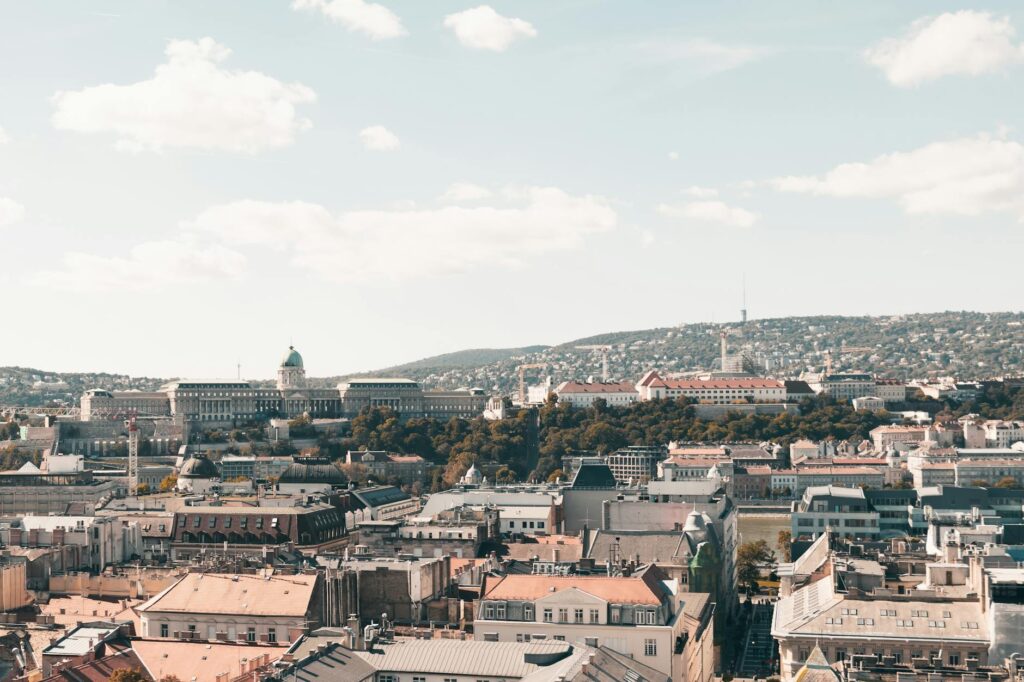
Budapest’s Surprisingly Central Position
This guide covers everything about where’s budapest in hungary. When you picture Budapest, do images of a far-flung, almost remote European capital come to mind? You’re not alone! Many travelers hold a misconception about its geographical placement, often associating it with Eastern Europe’s more distant reaches. However, the truth is far more central. Budapest, Hungary’s vibrant capital, isn’t tucked away in an obscure corner. it sits proudly at a crossroads of Europe, a fact that greatly influences its history, culture, and accessibility.
Last updated: April 22, 2026
So, where’s Budapest in Hungary? It’s located in the north of the country, straddling the mighty Danube River. This isn’t just any river. the Danube is Europe’s second-longest river and a vital artery, connecting Budapest to cities like Vienna and Belgrade. This prime positioning places Hungary, and thus its capital, firmly within Central Europe, a region known for its rich history and diverse cultures.
Pinpointing Budapest on the Map
To be precise, Budapest is situated in Northern Hungary, approximately 215 kilometers (134 miles) south of the Slovakian border. It’s not on the western edge of Hungary, nor is it nestled in the far east. Instead, it occupies a central spot within the Carpathian Basin, the large geological basin that dominates much of Hungary.
The city itself is a fascinating duality, split by the Danube into Buda (hilly, western side) and Pest (flat, eastern side). This geographical split has shaped the city’s development and character for centuries. The Buda side is characterized by rolling hills, including Gellért Hill and Castle Hill, offering stunning panoramic views. Pest, But — is the bustling commercial and administrative hub, flatter and more densely populated. Together, they form one of Europe’s most captivating capitals.
For context, Budapest is roughly equidistant from several major European capitals. It’s about a 2.5-hour flight from London, a similar distance to Berlin, and a manageable train ride from Vienna. According to the CIA World Factbook (2023), Hungary’s strategic location has historically made it a bridge between different European spheres.
Why the Confusion About Budapest’s Location?
The perception of Budapest being further east likely stems from the historical geopolitical divisions of Europe. During the Cold War, Hungary was part of the Eastern Bloc, and this political classification sometimes bled into geographical perception. Even after the fall of the Iron Curtain, the historical association lingered for some.
However, geographically and culturally, Budapest and Hungary are indisputably Central European. The country shares borders with Austria, Slovakia, Ukraine, Romania, Serbia, Croatia, and Slovenia. This array of neighbors further highlights its position as a nexus point. The Encyclopædia Britannica notes that Budapest’s location on the Danube was Key for trade routes connecting the north and south of Europe for millennia.
Think of it this way: if you were to draw a line down the middle of Europe, Budapest would be close to that line, perhaps leaning slightly east, but firmly in the central zone. It’s certainly not as far east as Moscow or Kyiv.
Navigating to Budapest: Practical Tips
Understanding where Budapest is also helps in planning your journey. Its central location makes it surprisingly accessible from various parts of the world.
By Air
Budapest Ferenc Liszt International Airport (BUD) is the main international gateway. It serves numerous airlines, including budget carriers like Wizz Air (a Hungarian airline!) and Ryanair, alongside major carriers such as Lufthansa, British Airways, and KLM. According to the airport’s official statistics (check the official source for exact figures), BUD handled over 12 million passengers in 2023, highlighting its significance as a travel hub.
From the airport, it’s about a 30-40 minute journey to the city center. Options include:
- Airport Shuttle Bus (miniBUD): A shared or private shuttle service directly to your accommodation.
- Public Bus 100E: A direct bus service to the city center (Deák Ferenc tér), running frequently. Here’s often the most economical option.
- Taxi: Readily available, but ensure you use an official taxi service or a reputable ride-sharing app to avoid overcharging.
By Train
Budapest is a major railway hub. International trains arrive at Keleti (Eastern) or Nyugati (Western) stations. It’s well-connected to neighboring countries:
- Vienna: Approximately 2.5-3 hours
- Prague: Around 6-7 hours
- Bratislava: Just over 2 hours
- Belgrade: About 6-7 hours
Booking train tickets in advance, especially through platforms like MÁV Hungarian State Railways, can often secure better prices.
By Car
Driving to Budapest is feasible, with major highways connecting it to surrounding countries. However, be aware of vignette requirements (toll stickers) for using motorways in Hungary and neighboring countries. You can purchase these online or at border crossings.
Budapest’s Strategic Importance: A Historical Perspective
The city’s location wasn’t just convenient. it was strategically vital throughout history. Situated on the Danube, it controlled important trade routes and served as a natural defense point for the Hungarian kingdom. The Pannonian Basin offered fertile land for agriculture, while the river facilitated commerce and communication.
During the Austro-Hungarian Empire, Budapest (formed by the unification of Buda, Óbuda, and Pest in 1873) became the dual capital alongside Vienna, cementing its status as a major European center. This era saw immense growth and the construction of many of the iconic buildings still standing today, like the magnificent Parliament Building.
The geographical position of Budapest has always been a double-edged sword: a gateway for trade and culture, but also a vulnerable frontier for invading forces throughout history.
This historical significance is palpable as you wander through the city, from the grandeur of Andrássy Avenue to the imposing Buda Castle complex. Understanding this context adds another layer to appreciating where Budapest is and what it represents.
Beyond the Location: What Makes Budapest Special?
While pinpointing its location is key, Budapest’s allure goes far beyond mere geography. Its position in Central Europe means it’s a melting pot of influences—Slavic, Germanic, Ottoman, and Magyar cultures have all left their mark.
This rich cultural tapestry is evident in:
- Architecture: From Gothic churches and Baroque palaces to Art Nouveau gems and Soviet-era blocks, the city is an open-air museum.
- Cuisine: Hungarian food is hearty and flavorful, influenced by its neighbors and historical context. Think goulash, lángos, and chimney cake (kürtőskalács).
- Thermal Baths: Budapest is famously known as the “City of Spas,” with numerous thermal baths Using the region’s geothermal activity, a direct result of its geological setting. The Széchenyi and Gellért Baths are world-renowned.
- Arts and Music: The city boasts a vibrant music scene, numerous theaters, and art galleries, reflecting its historical role as a cultural capital.
Frequently Asked Questions
Is Budapest in Eastern or Central Europe?
Geographically and culturally, Budapest is firmly located in Central Europe. While historical political alignments during the Cold War sometimes led to it being grouped with Eastern Europe, its position within the Carpathian Basin and its historical ties place it squarely in the Central European region.
What country is Budapest the capital of?
Budapest is the capital city of Hungary. it’s the largest city in the country and serves as its primary political, cultural, industrial, and commercial center.
How far is Budapest from Vienna?
Budapest is approximately 240-250 kilometers (about 150-155 miles) east of Vienna, Austria, as the crow flies. By train or car, the journey typically takes around 2.5 to 3 hours, depending on traffic and train schedules.
Is Budapest on the Danube River?
Yes, Budapest is famously situated on both sides of the Danube River. The river divides the city into the hilly Buda side and the flat Pest side, playing a Key role in its geography and historical development.
Is it easy to travel to Budapest from other European cities?
Yes, it’s generally very easy to travel to Budapest from other major European cities. Its central location is well-served by numerous flights from budget and major airlines, as well as extensive train and bus networks connecting it to neighboring countries and beyond.
Final Thoughts on Budapest’s Location
So, the next time someone asks, “where’s Budapest in Hungary?” you can confidently explain its central European heart. It’s a city strategically positioned on the Danube, bridging East and West, past and present. Its accessibility, rich history, and unique cultural blend make it a must-visit destination. Don’t let outdated perceptions keep you from discovering this captivating capital. Start planning your Central European adventure to Budapest today!
Editorial Note: This article was researched and written by the Inhapx editorial team. We fact-check our content and update it regularly. For questions or corrections, contact us.